What happens to a beloved fictional world when its most reassuring inhabitants never arrive? Tove Jansson’s Moominvalley in November offers a surprising answer. In the final Moomin novel, visitors gather at the familiar house, hoping to find the family who usually makes everyone welcome. But the Moomins are away. Rather than send the visitors on a heroic rescue mission, Jansson lets them try to live together without the people on whom their expectations depend.
November is an apt moment to revisit this quietly radical book, though there is no newly announced publication behind this guide. First published in Swedish as Sent i november in 1970, it appeared in English in 1971. The established Tove Jansson bibliography confirms both dates; modern English editions remain identifiable by publisher and ISBN. The central question is not simply why the Moomins have vanished, but what other people discover about themselves when a comforting image of home proves insufficient.
A Finnish writer working in Swedish
Jansson (1914–2001) was a Finnish artist and author who wrote the original Moomin books in Swedish, one of Finland’s national languages. That detail matters for readers entering Nordic literature through translations: the Moomins are not originally Danish, nor were they first written in Finnish. Their creator worked across illustration, comics and prose, moving between stories for children and fiction for adults.
The Moomin family’s generosity became part of the series’ international appeal, but warmth was never its only register. Catastrophe, loneliness and fear appear even in the earlier adventures. As critic Evan James argues in The Yale Review, Jansson repeatedly crossed the supposed boundary between children’s fantasy and serious philosophical questions. The final novel makes that tension especially visible by withholding the very family readers expect to meet.
Why is an empty house such a strong beginning?
An absent character can shape a story as strongly as a visible one. The visitors arrive with different ideas of what the Moominhouse will provide: company, order, security, or an opportunity to become someone else. Its emptiness reveals how much they have invested in a place and in people they may not truly understand. The house is recognizable, but its usual hospitality cannot be summoned on demand.
Among those drawn to the valley are the solitary Toft, the independent Mymble, the fretful Fillyjonk, a Hemulen and the wandering Snufkin. Their differences create an ensemble story: instead of following one conquering hero, readers watch several personalities collide, withdraw and occasionally accommodate one another. The tension often lies in whether anyone can recognize another person’s needs without assigning them a ready-made role.
Toft is particularly important. According to the novel’s published account and Philip Ardagh’s discussion in The Guardian, he hopes to find in Moominmamma the ideal parent he lacks. His expectation is poignant, but it creates a problem: an imagined parent cannot answer back or challenge the child’s picture of her. The reader can ask whether Toft seeks a particular person, or the feeling that an ideal person would finally make his life secure.
Community is harder than comfort
It would be easy to turn this into a sentimental lesson about strangers forming a perfect substitute family. Jansson’s design is more awkward. These visitors have habits, fears and private agendas. They do not instantly become kind merely because they share a roof. In the account by essayist Will Buckingham, Fillyjonk attempts to take on the host’s role, Snufkin struggles with a half-remembered musical phrase, and the Hemulen considers a different life. Each wants something the others cannot simply hand over.
That makes the novel an interesting counterpart to contemporary stories about found families. Belonging is not a service supplied by an exceptionally generous household; it requires encounters with actual, inconvenient people. At the same time, needing help is not a weakness that must be cured.
Jansson’s setting gives the question physical form. A house normally associated with summer activity is surrounded by late-autumn weather. Seasons are more than decoration here. With familiar routines suspended, every small attempt at shared living becomes noticeable. Readers who expect the energy of an expedition may find the pace slow, but that slowness is what lets waiting become the central action.
Is this a children’s book about grief?
There is good reason to read loss into the story, provided biography does not become a substitute for literary analysis. James cites Jansson’s biographer Tuula Karjalainen on the importance of mortality and notes that Jansson wrote while her mother was nearing death. The observation helps explain the book’s sombre atmosphere, but it does not make every character an allegorical portrait of the author.
Indeed, the emotional range is broader than grief alone. The visitors can be stubborn, absurd, watchful and funny. Their attempts at self-reinvention are sometimes comic precisely because the old personality keeps reappearing. Humour prevents the absence from becoming a single message, while the unanswered question of the family’s return gives every gesture a different weight.
Readers familiar with Denmark’s fairy-tale tradition may recognize how an apparently simple invented world can carry troubling human questions. Litteraturnet’s guide to Andersen and Danish Romanticism offers a historical comparison, not a claim that Jansson belongs to that Danish movement. For a much newer and harsher use of Nordic folklore, see our guide to Rasmus Daugbjerg’s Troll. The works differ sharply, but all resist the idea that imaginative literature must offer uncomplicated reassurance.
Three English-language ways into Jansson
Start with Moominvalley in November if you are interested in longing, complicated hospitality and the emotional life of a group. The English translation is by Kingsley Hart. Puffin’s UK paperback dated 6 February 2025 carries ISBN 9780241344538; Sort Of Books also documents a separate illustrated collectors’ hardback, ISBN 9781908745712. A slower, chapter-by-chapter reading suits its shifting attention between visitors. It can stand alone, although knowing the Moomins makes their absence more affecting.
Read Moominpappa at Sea next if you want to understand where the absent family has gone. The original Swedish book, Pappan och havet, appeared in 1965. In this story Moominpappa takes the family to an island with a lighthouse, and apparent adventure gives way to questions about purpose and isolation. The verified Puffin UK paperback of 2025, translated by Kingsley Hart, has ISBN 9780241344514. Reading the two books together creates a productive contrast between those who depart and those who remain.
Then try The Summer Book for Jansson’s adult fiction without Moomin characters. Originally published in Swedish as Sommarboken in 1972, it follows a child and grandmother through small encounters on a Finnish island. Its humour and attention to landscape offer a counterpoint to November’s longing. The English translation is by Thomas Teal; the UK Sort Of Books edition has ISBN 9780954221713. Readers interested in understated writing about care, mortality and ordinary conversation may find this the most revealing comparison.
Moominvalley in November is therefore an unusual farewell: it asks readers to imagine a world that does not depend entirely on the return of its stars. Its enduring question is whether affection can mature when the people or places we idealize are unavailable. For an autumn reading guide, that is a more useful invitation than nostalgia alone.
Sources and further reading
Tove Jansson official bibliography: Moominvalley in November (original and translation dates); Sort Of Books: Moominvalley in November (translator and collectors’ edition); Puffin: Moominvalley in November (2025 UK edition); Evan James, “Tove Jansson’s Genius,” The Yale Review; Philip Ardagh, “A Friend in Need,” The Guardian (1 November 2003). For the reading sequence: Puffin, Moominpappa at Sea and Sort Of Books, The Summer Book.
Will Buckingham, “The Art of Waiting: Tove Jansson’s Moominvalley in November” (critical essay).
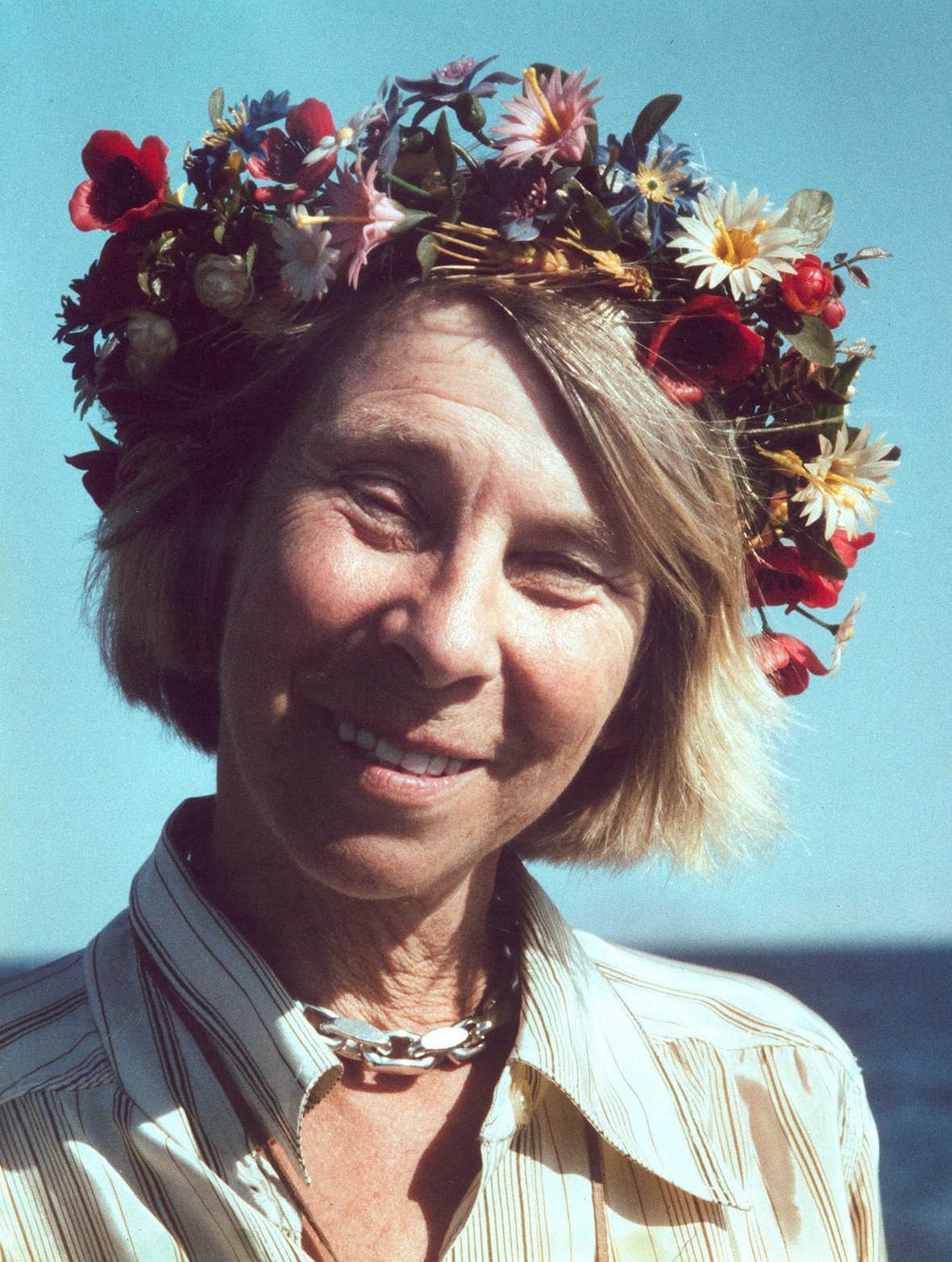
Photo: Per Olov Jansson / Wikimedia Commons, CC BY 3.0; displayed at original aspect ratio.
