A novel about a fishing village in early twentieth-century Iceland might seem an unlikely focus of a literary evening in Copenhagen nearly a century later. For 11 November 2026, Nordatlantens Brygge advertised a conversation with translator Annette Lassen and critic Erik Skyum-Nielsen about Halldór Laxness’s Salka Valka. Its occasion was a new, complete Danish translation, published by Gyldendal earlier in 2026. For English-speaking readers, the event raises a useful question: what survives when a novel travels between languages, decades and literary expectations?
The Icelandic original appeared in two volumes in 1931 and 1932. It is neither a new novel nor a newly released English translation. English readers already have Philip Roughton’s 2022 translation from Icelandic. The Copenhagen conversation is news about the book’s Danish afterlife—and an opportunity to approach a forceful, uncomfortable classic without treating it as a museum exhibit.
A village where money is power
The novel begins with an impoverished mother, Sigurlína, and her young daughter Salvör, nicknamed Salka Valka, arriving in the fictional coastal settlement of Óseyri. They hope for a better life but encounter a town whose economy revolves around fishing and the authority of a powerful merchant. The landscape matters, but the community is not merely a picturesque backdrop for a northern adventure.
Work, credit and the ability to obtain necessities shape what people can choose. The influential merchant controls much of the local economic system. As the women attempt to establish a home, their position reveals how precarious survival becomes when employment, respectability and access to resources are entangled. Laxness makes questions of class concrete: who is paid, who owes, who has somewhere to sleep, and who can refuse an arrangement that seems unavoidable?
The historical setting is distinct from contemporary Iceland. Still, readers may recognise the underlying problem: independence sounds simple until someone else owns the terms of your livelihood. For background on a related European period, see Litteraturnet’s guide to Danish fiction and crisis in the 1930s; it offers context, not a claim that Danish and Icelandic literature developed identically.
A heroine who cannot simply choose freedom
Salka’s coming of age is often introduced through her courage: she cuts her hair, seeks an education and becomes involved with the working class and its organisation. Those actions matter because they contest expectations about women’s work, appearance and obedience. Yet describing her only as an inspirational rebel would make the novel tidier than its documented events allow.
Her childhood is marked by vulnerability, grief and predatory behaviour from adults. Her mother’s circumstances also resist easy moral judgment. The relationship between mother and daughter carries competing needs for protection, affection and survival. Independence does not erase dependency; it requires living amid people and institutions that may offer both support and harm.
That complexity distinguishes a coming-of-age novel from a simple triumphal story. A Bildungsroman, or novel of formation, follows a person’s development through encounters with the world. In Salka’s case, formation involves learning how power works, not merely discovering an authentic inner self. Readers can ask which decisions she genuinely controls and which are negotiated under pressure. It is worth approaching the novel with care: accounts of its plot include sexual violence and a death by suicide, even though this guide avoids graphic detail and major late-stage spoilers.
Religion, politics and the limits of neat answers
In Óseyri, religious belief and political movements are more than abstract arguments. They supply competing ways to understand poverty, responsibility and hope. The Salvation Army offers Sigurlína an important framework; later, labour organisation and socialist ideas bring other promises of change. The town’s characters do not become mere mouthpieces for these institutions.
Salvatore Scibona’s 2022 essay in The New Yorker describes the novel’s political entanglements without reducing it to propaganda. That distinction makes a strong reading question: does a programme for transforming society necessarily understand the people it hopes to liberate? Laxness can be sympathetic to the vulnerable and still sceptical of anyone offering a complete explanation for them.
His fiction also mixes hardship with irony and humour. A book about economic dependence need not sound like a policy paper. The tension between the scale of political ambitions and the small details of daily life is one reason the village can feel simultaneously local and expansive.
What translation changes—and what we cannot assume
There is a particular irony in Copenhagen discussing a new Danish Salka Valka. The book’s English-language history once depended on Danish: as Scibona reports, its 1936 English version was produced via a Danish translation rather than directly from Icelandic. Laxness objected to the loss of his style. Philip Roughton’s 2022 English version was translated directly from Icelandic, giving present-day readers a different route to the original.
Gyldendal’s 2026 Danish edition, translated by Annette Lassen with a foreword by Kristín Marja Baldursdóttir, is a separate publication. Its appearance does not mean that English readers must wait for a corresponding new translation: Roughton’s edition already exists. Nor can we assert, without comparing complete texts, precisely how Lassen and Roughton render individual metaphors, humour or dialogue.
Instead, the translation history suggests questions to carry into reading. How might a narrator’s comic distance survive in another language? What happens to the social texture of work and religion when familiar words carry different cultural associations? And why does it matter whether a translation reaches readers directly from Icelandic or through an intermediate language? These are invitations to attentive reading, not unsupported verdicts on translations we have not compared line by line.
Where English readers can begin
1. Salka Valka (2022). Start with the novel at the centre of the conversation if you enjoy expansive social fiction with complicated characters. Philip Roughton translated it directly from Icelandic. The US Archipelago paperback has ISBN 9781953861245; the UK Vintage Classics paperback has ISBN 9781784877606. Check which edition a listing describes rather than assuming its pagination or imprint is universal. The length, difficult experiences and shifts between intimate life and political conflict reward unhurried reading.
2. Independent People. Continue with Laxness’s portrait of a small farmer determined to be self-reliant, even at great human cost. The English Vintage paperback, translated by J. A. Thompson, has ISBN 9780679767923. Where Salka’s struggle takes place within a fishing community, this novel tests the meaning of freedom in rural life. The comparison is useful precisely because neither book treats independence as an uncomplicated virtue.
3. The Fish Can Sing. For a different register, try a story of childhood, a modest Icelandic household and the bewildering pull of public fame. The English Vintage paperback, translated by Magnus Magnusson, has ISBN 9780307386052. Its humour and concern with belonging offer another way to encounter Laxness beyond the image of a relentlessly severe social novelist.
English readers interested in Icelandic writing today can also visit Litteraturnet’s guide to Lilja Sigurðardóttir’s contemporary Icelandic fiction; it is a change of genre and era, not a direct literary sequel.
The 11 November programme in Copenhagen illustrates how a classic can have different lives in neighbouring languages. The new Danish edition is a cultural event; the 2022 English translation is a practical starting point. What connects them is the force of Laxness’s question: when society promises freedom, whose freedom is it, and what does achieving it cost? Salka Valka asks readers to look for the answer in people’s choices, material conditions and imperfect relationships.
Sources and further reading
Nordatlantens Brygge: Salka Valka discussion, 11 November 2026; Gyldendal: Danish edition and translator details; Archipelago Books: English edition by Philip Roughton; Salvatore Scibona, “The Rediscovery of Halldór Laxness” (The New Yorker, 4 July 2022); Kirkus Reviews: Salka Valka (14 December 2021); Vintage: Independent People; Vintage: The Fish Can Sing.
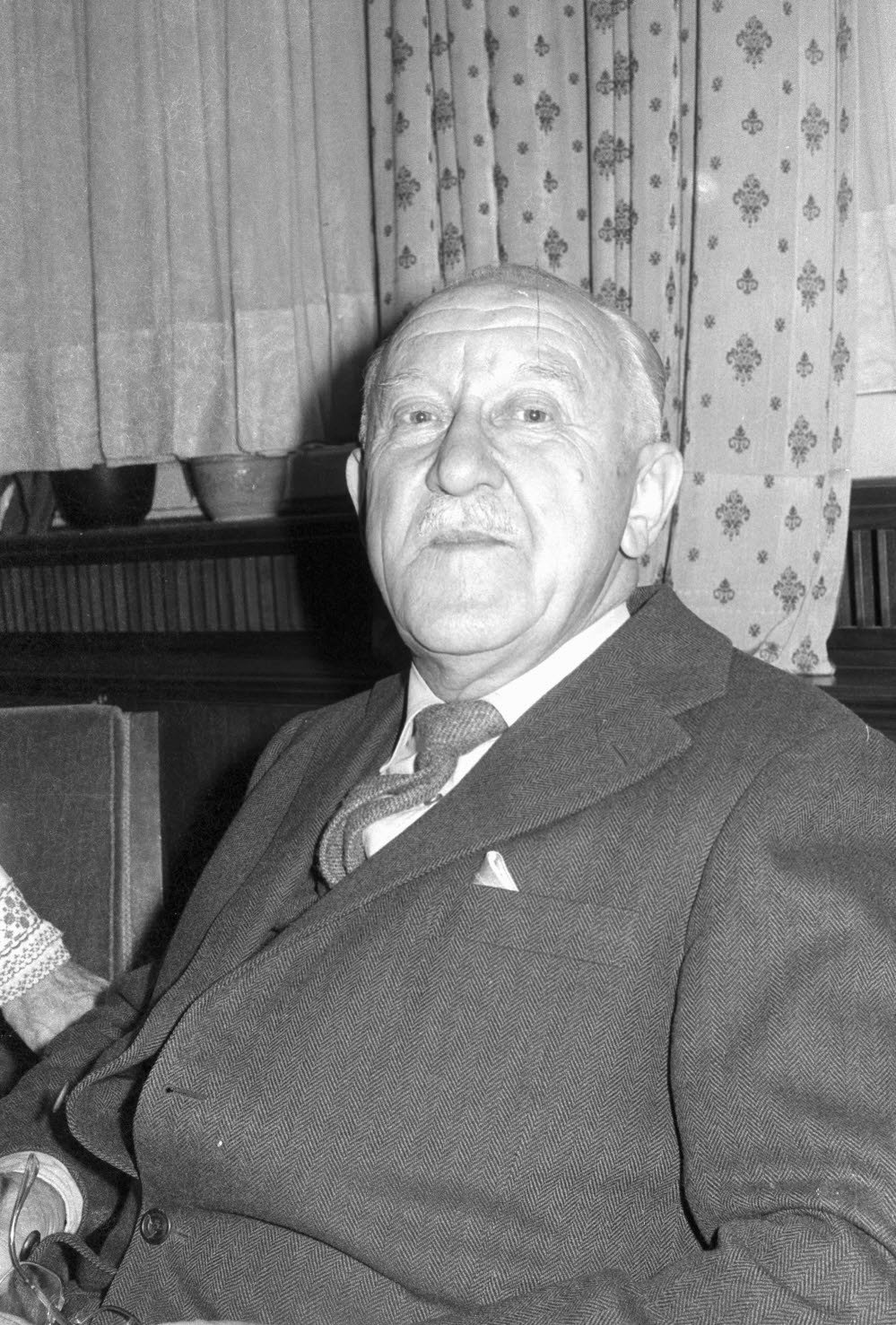
Photo: Friedrich Magnussen / Stadtarchiv Kiel via Wikimedia Commons, CC BY-SA 3.0 Germany. No manual cropping or alteration.
