In Feline Kamber’s debut novel Foder til høns, an approaching wedding does not promise a happy ending. On an unnamed island in the Danish Wadden Sea, sisters Inger and Rakel are caught in a conflict involving Frode, the man Inger is expected to marry. Yet ordinary jealousy is only part of the disturbance: the dead remain present, cats behave like servants, and a porcelain figure becomes unsettlingly alive. Why would a new Danish writer use such strange creatures to tell a recognisable story about power?
On 30 October 2026, Kamber won Bogforum’s Debutant Prize, presented at the opening of Copenhagen’s annual book fair. The award brings attention to a 2026 Danish-language novel that English-speaking readers may not yet know. This is a documented introduction to the novel’s premise, critical reception and literary context, rather than a review based on reading the entire book.
An island outside ordinary time
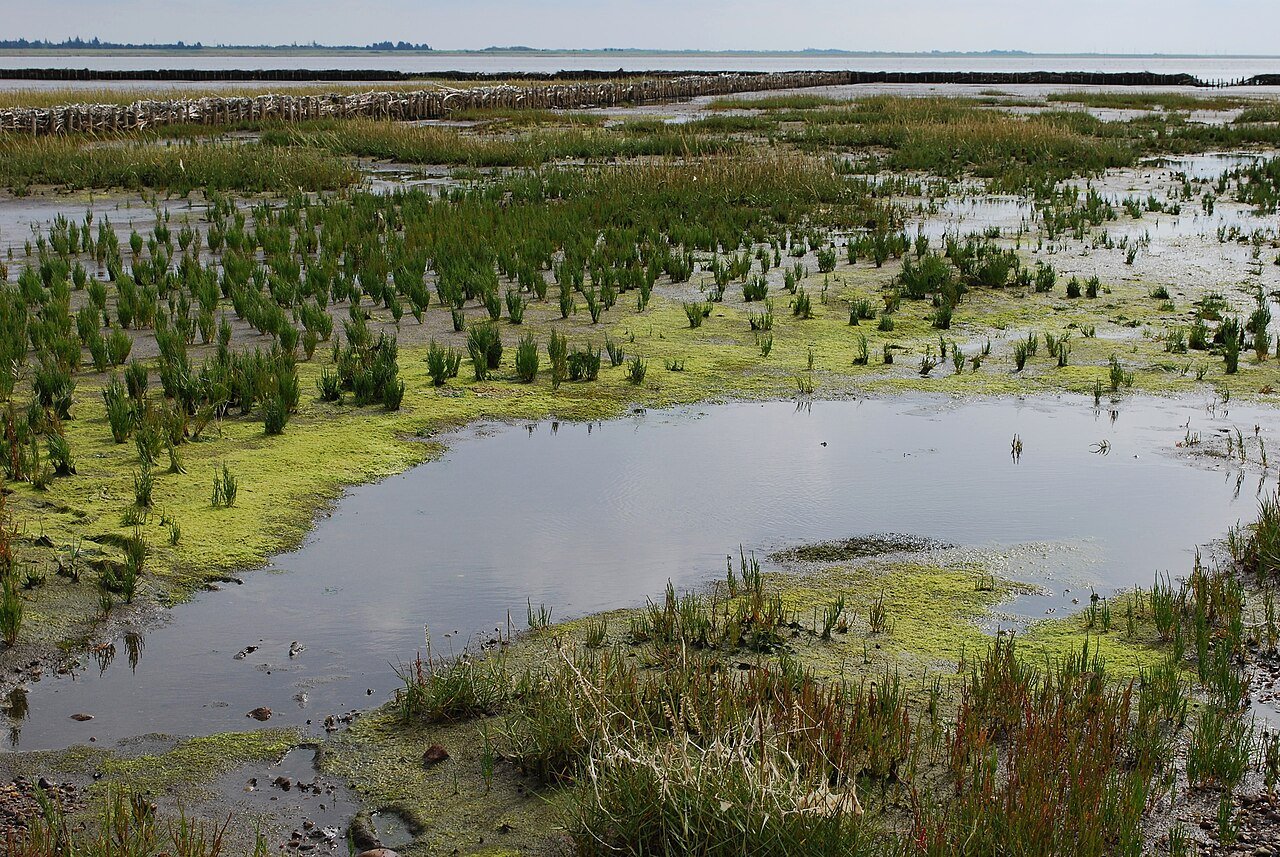
The Wadden Sea stretches along the coasts of Denmark, Germany and the Netherlands. Its tidal flats and low-lying islands make an unusually suggestive fictional landscape: the boundary between land and water is visibly unstable. Kamber’s book does not identify its island as a real place, and its historical period is deliberately uncertain. The atmosphere evokes an older rural society without making the novel a straightforward reconstruction of Danish history.
That uncertainty matters. Descriptions of thatched houses, mud, animals and laborious survival might initially suggest historical realism. Then the supernatural arrives without a reassuring explanation. The boundary between living people and ghosts is as porous as the shoreline. It is tempting to classify the novel immediately as fantasy, but its distinctive tension may lie in how little its characters can separate the extraordinary from everyday social rules.
The ghost is not the only source of fear
The central relationship is comparatively easy to grasp. Inger has been promised to Frode; Rakel secretly meets him in the henhouse. Beneath this triangle lie questions about who may choose a partner, who must obey an arrangement and how a small community punishes transgression. The island is not simply an eerie backdrop for private desire. It is a place where relatives, neighbours and authorities are difficult to escape.
The prize jury’s published description emphasises social control, desire and the collapse of boundaries between humans, animals and things. These are the organisers’ judgements, not an independently verified account of every scene. But they suggest a productive question for readers: if the apparently normal social order is already coercive, what is actually monstrous about the ghosts?
The setting also complicates romantic ideas of Nordic nature. This is not the picturesque coast of a travel brochure. Material hardship, dampness and physical discomfort are prominent in descriptions of the novel. Such details prevent the supernatural from floating free of ordinary life; strange events take place among people who must still eat, work and negotiate their dependence on others.
Why the novel is called folk horror
Folk horror is a useful, though not exhaustive, description for stories in which local beliefs, isolation and inherited customs become sources of unease. The threat often comes not from a single villain but from the rules a community treats as natural. It is a term worth handling carefully: Kamber’s creatures do not automatically make her book part of one fixed genre.
Writing in ATLAS on 23 April 2026, critic Anna Schmidt Andersen called the novel an example of Danish folk horror. She highlighted its sensory excess and the difficulty of determining what is animal, human, alive or dead. The review describes different narrators and a persistent uncertainty about the porcelain figure known as Munken. Rather than pretend to settle these mysteries, a reader can treat them as part of the book’s effect.
Oscar Juul’s review in LitteraturNu, dated 20 April, offers another emphasis: bodily textures, poverty and the juxtaposition of intimacy and repulsion. His discussion of the novel’s language suggests that the physical imagery is not merely decoration. It shapes the reader’s sense of a place in which boundaries are repeatedly crossed.
A prize does not erase disagreement
Bogforum’s award was not the novel’s first appearance in public: Foder til høns was published by Gutkind on 23 April 2026. Nor should the prize be mistaken for unanimous critical approval. Danish coverage includes strongly admiring assessments as well as reservations about the relentless unpleasantness and ambiguity of its world. Readers who dislike grotesque bodily detail may find the premise demanding rather than inviting.
That is a useful distinction between recognition and accessibility. An award can identify originality and ambition without promising that everyone will enjoy the result. Kamber’s achievement, as described by reviewers, is not simply to make a supernatural island believable. It is to make its social arrangements feel strange enough to question.
Three ways to enter this territory
1. Feline Kamber, Foder til høns (Gutkind, 2026). Start here if you read Danish and want the prizewinner itself. The original-language paperback is documented under ISBN 9788743412144. Its title literally concerns feed for hens; that explanatory gloss is not the name of a verified English edition. An English translation could not be confirmed from the sources checked for this guide. Its mixture of bodily unease, island life and supernatural creatures appears best suited to readers comfortable with disturbing material and unresolved questions.
2. Olga Ravn, The Wax Child (Viking, UK hardback 2025). For readers seeking a verified English translation of unsettling Danish fiction, Martin Aitken’s translation of Voksbarnet is a compelling alternative. The UK hardback carries ISBN 9780241752746. Set against seventeenth-century witchcraft accusations, it uses an uncanny object as a witness. Its historically grounded persecution differs from Kamber’s deliberately undated island, but both introduce a useful question: who is allowed to define what counts as human, dangerous or credible?
3. Ane Riel, Resin (Black Swan, UK paperback 2019). Charlotte Barslund translated Riel’s Danish Harpiks, first published in 2015. The English paperback has ISBN 9781784163419. It is a more recognisable psychological suspense story involving an isolated family and a father’s destructive notion of protection. Choose it if you want a darker Danish narrative with clearer thriller momentum rather than Kamber’s unstable folk-tale world.
These books are points of comparison, not a single movement with identical aims. For a different encounter with the unsettling in Danish storytelling, see Litteraturnet’s English guide to Rasmus Daugbjerg’s Troll. Its focus on nature and violence shows how contemporary writers can make older narrative traditions newly uncomfortable. A related Danish-language article on Kamber and the marsh provides more background; it is not a line-by-line version of this guide.
Kamber’s 2026 debut prize raises a question broader than whether ghosts can frighten us. What happens when a novel makes the rules of ordinary society appear as peculiar as the creatures that haunt it? For international readers, the answer begins with recognising both the imaginative force of the prizewinner and the practical distinction between a Danish original and books genuinely published in English.
Sources and further reading
Bogforum: 2026 Debutant Prize announcement and award history (award presented 30 October 2026); Bogforum: jury account of the shortlisted novel; Oscar Juul, LitteraturNu, 20 April 2026; Anna Schmidt Andersen, ATLAS, 23 April 2026; The Booker Prizes: The Wax Child and Martin Aitken; Penguin: Resin paperback and ISBN.
Photo: Erik Christensen / Wikimedia Commons, CC BY-SA 3.0. Tidal marsh near Mandø, photographed 29 August 2013; the photograph does not depict the novel’s fictional island. Original image reproduced without manual cropping; WordPress may generate scaled display versions.
