A murder mystery normally begins with a crime the police must explain. Lilja Sigurðardóttir’s Alfa begins with a more unsettling possibility: what if the crime should have been impossible? In its Reykjavík of 2052, an artificial intelligence manages the systems that make society safe, efficient and prosperous. When a dissident is killed, the question is not only who did it. It is what the death reveals about a political order built on the promise that human error can be designed away.
Alfa, translated from Icelandic by Larissa Kyzer, was published in English by Orenda Books on 5 November 2026 (paperback ISBN 9781917764513). The original Icelandic novel appeared in 2025. This is a guide to the novel’s premise and critical reception, not a review based on having read the entire book. It offers a way into a recent Nordic thriller that uses a familiar detective-story question to examine larger choices.
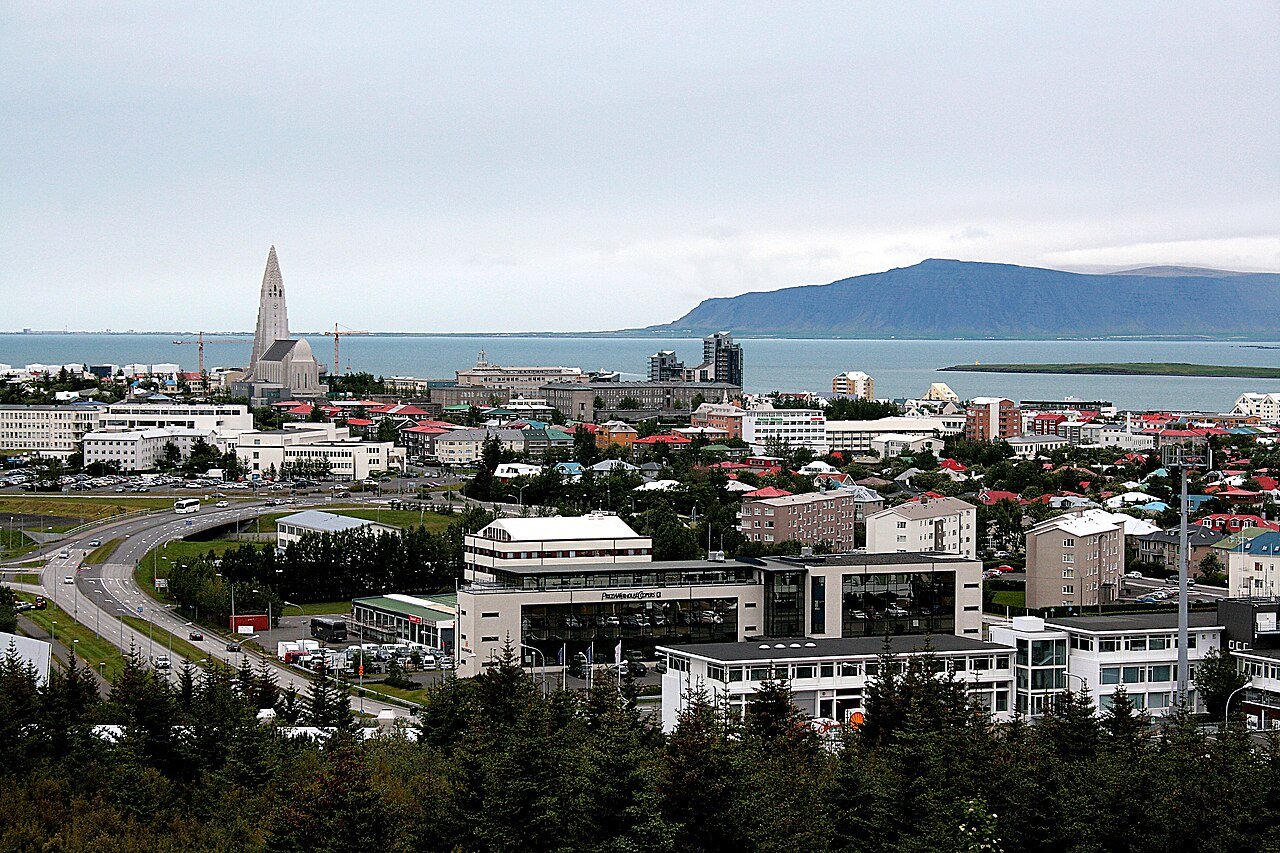
A murder in a computer-managed Reykjavík
The publisher sets the story in a Europe governed by an AI called Ɐlfa. It manages infrastructure, public safety and ordinary life. Mekkín works at the Ministry, close to the system’s administration; her partner, Sabína, is an artist. Their family is implicated when Sabína’s brother Birkir, who has rejected the system and lives outside its reach, is murdered. The investigation brings competing loyalties into the home, while the couple’s teenage son is becoming more closely integrated into the technological order.
These are the documented elements of the set-up, not revelations about the solution. The book’s central dramatic tension is apparent: the state claims to have made violence exceptionally rare, yet someone has died violently. A conventional detective must decide which person is lying. In this imagined world, the characters must also decide whether the system telling them what is possible deserves their trust.
Why an apparently safe society can be frightening
Dystopian fiction often depicts a society that is visibly oppressive. Alfa starts instead with an attractive bargain. Peace, security and orderly public services are genuine benefits; they explain why people might accept highly centralised decisions. A story about technology becomes more interesting when it acknowledges the good that its inhabitants believe they have gained.
But good outcomes raise a difficult question: who gets to define them? If a system allocates work, regulates movement and anticipates danger, its decisions can begin to look like neutral facts rather than choices for which anyone is accountable. The distinction between efficient administration and political authority is crucial. An algorithm may produce a recommendation; the power to make it binding still affects human lives. Readers can carry that question into the novel without assuming that every character who trusts Ɐlfa is foolish or that every dissident is right.
The Icelandic Literature Center’s account identifies control, resistance and the cost of perfection as themes. It also describes the son’s coming-of-age milestone: his future is to be assigned through the system. For a parent, a convenient public order may suddenly look different when it claims authority over a child’s future.
Nordic noir meets speculative fiction
Sigurðardóttir is known internationally for Icelandic crime fiction, including the Áróra investigation novels. Alfa is not another instalment of that series. It is a standalone speculative thriller, and the shift in genre matters. Speculative fiction imagines a changed world in order to test the assumptions of our own. Crime fiction uses an unexplained event to force secrets into the open. Here the two forms reinforce one another: the investigation supplies urgency, while the future setting asks what counts as evidence, freedom and responsibility.
This approach complicates a familiar idea of Nordic noir. International readers often associate Scandinavian and Icelandic crime stories with cold weather, bleak landscapes and damaged investigators. Those ingredients can be effective, but they are not a definition of the genre. The more durable interest is often institutional: what happens when confidence in an apparently functional society collides with the injuries and inequalities it conceals? Alfa moves this question into an imagined technological future.
The intimate cost of collective certainty
The most promising feature of the premise may be its decision to place a family inside the political dilemma. Mekkín has professional obligations; Sabína has an obligation to her murdered brother; their son must navigate the future assigned to him. These relationships prevent the argument from remaining an impersonal contest between humans and machines. Even a society designed to eliminate conflict cannot abolish conflicting commitments.
In a review published on 11 November 2026, Jen Lucas praises the novel’s character relationships and its combination of a plausible future with misdirection. She identifies the way the investigation tests trust within the family. That is a critic’s response after reading the book, not evidence that every reader will find the characters equally convincing. It does suggest a useful question: when people disagree about what safety requires, whom do they believe?
The book’s imagined future can be compared with the ethical puzzles of Solvej Balle’s On the Calculation of Volume. Balle’s recurring day is not Sigurðardóttir’s algorithmic state. Yet both narrative inventions allow ordinary choices—about time, resources and other people—to become newly visible.
Does the novel have to predict the future?
No. A speculative novel is not a technical forecast, and treating it as one can make a reader miss its literary questions. Whether a single AI could govern an entire continent in 2052 is less important than the consequences of believing that an apparently flawless decision-maker deserves unchecked authority. The fictional premise compresses questions already difficult in everyday life: who can challenge a decision, who can inspect the evidence and what happens to people who opt out?
Where should an English-language reader begin?
1. Alfa. Begin here if you want a standalone mystery rather than a long series. The English paperback is Orenda Books’ 2026 edition, translated by Larissa Kyzer (ISBN 9781917764513). Its original Icelandic edition was published in 2025. Approach it as a thriller with a social thought experiment, and keep the mystery’s solution separate from the questions the setting raises.
2. Cold as Hell. For a contrast, read the first Áróra investigation. Its mystery concerns a missing woman and her estranged sister, with recognisable contemporary Iceland rather than an AI-managed future. The English Orenda paperback appeared in the UK in 2021, translated by Quentin Bates (ISBN 9781913193881). This is a better starting point if you want to follow the detective series in order.
3. Red as Blood. Continue with the second Áróra novel if you enjoy the characters and ongoing investigation in Cold as Hell. Orenda’s English paperback was published in 2022, also translated by Quentin Bates (ISBN 9781914585326). It belongs to a continuing series and is not a sequel to Alfa.
Readers exploring Nordic writing beyond crime can visit Litteraturnet’s guide to Dorthe Nors’s Range for a contrasting Danish novel about science and unsettled human relationships. In Alfa, a murder brings the system’s promises into question. The larger literary question is whether anyone can delegate responsibility for living together.
Sources and further reading
Orenda Books / Simon & Schuster: Alfa (UK edition, 5 November 2026; translator and ISBN); Icelandic Literature Center: Alfa (original 2025 edition and synopsis); Jen Lucas: review of Alfa (11 November 2026); Orenda / Simon & Schuster: Cold as Hell; Orenda Books: Red as Blood.
Photo: Hedwig Storch / Wikimedia Commons, CC BY-SA 3.0; resized for web display.
